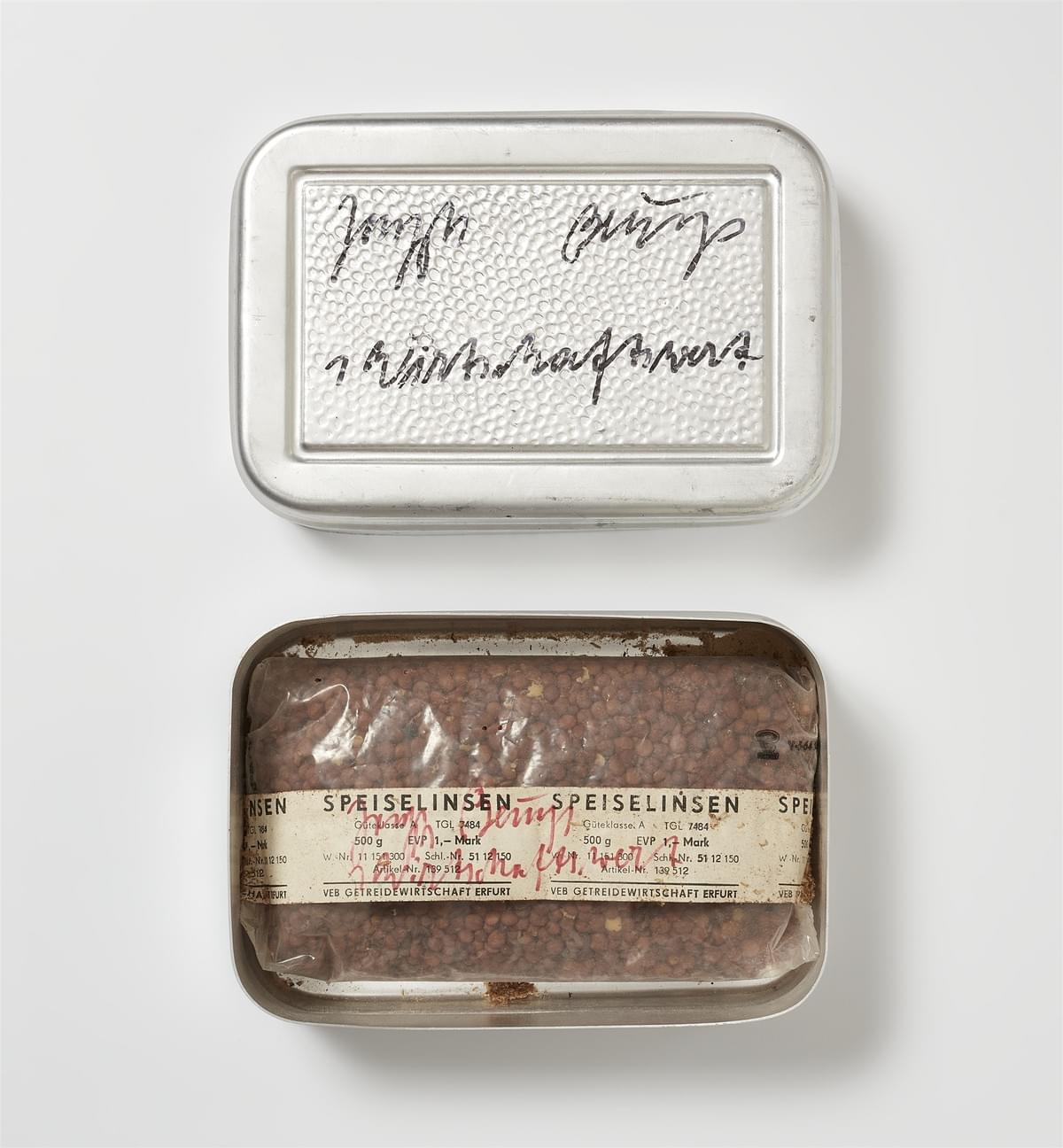
I recently acquired a small tin of lentils.
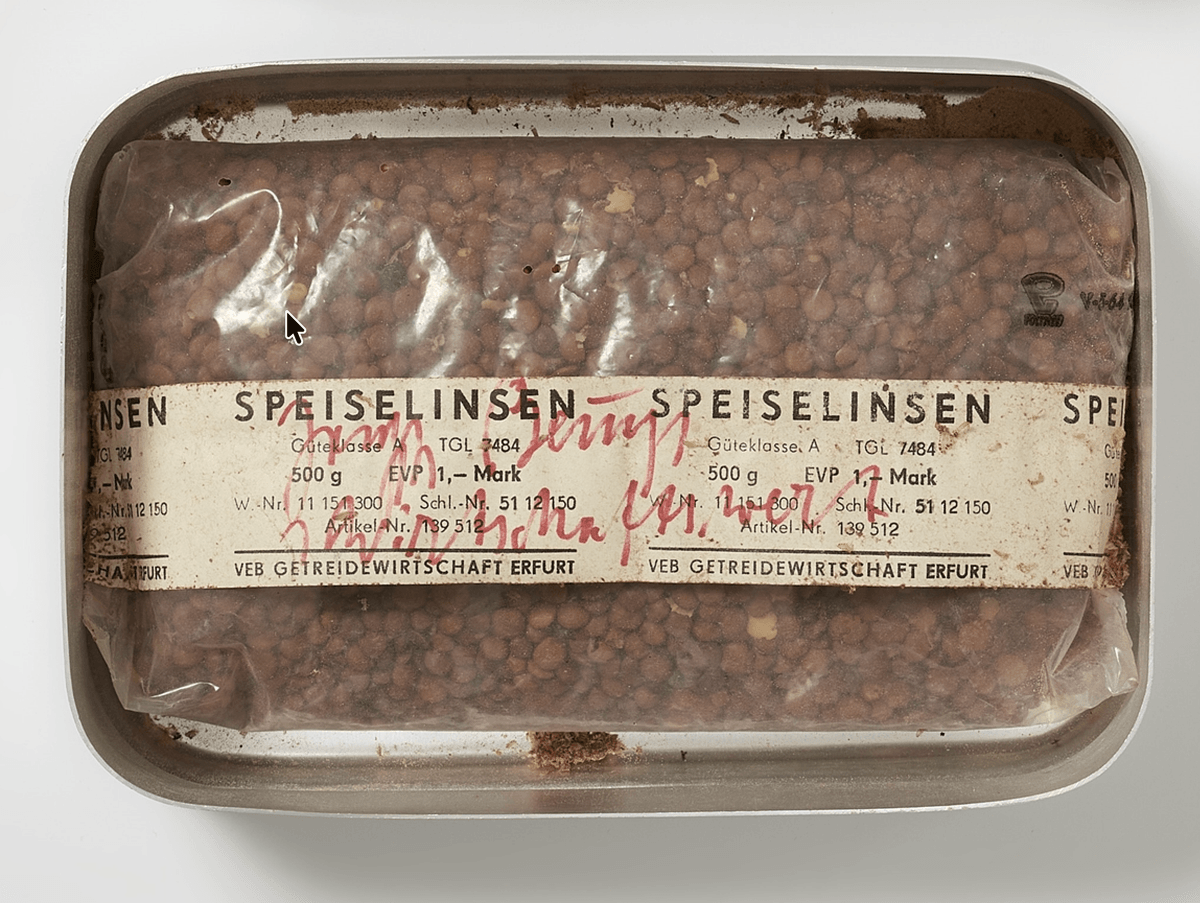
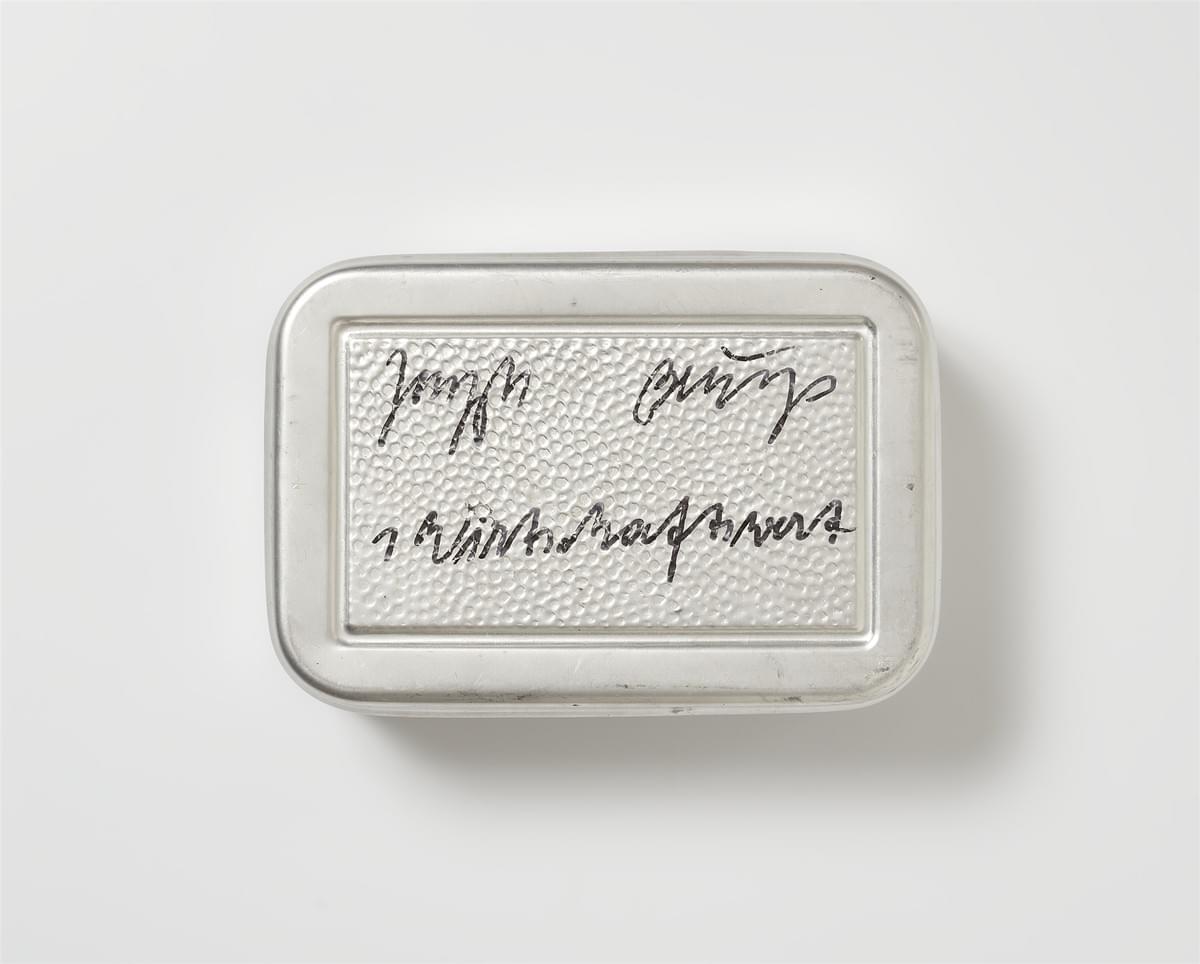
Not particularly appetizing ones. They were packaged sometime before 1984 in the German Democratic Republic, by a state-owned grain enterprise in Erfurt. The label reads Speiselinsen, 500 grams, EVP 1 Mark.
One mark. The retail price established by the state for half a kilogram of lentils.
The tin bears the signature of Joseph Beuys, alongside the inscription 1 Wirtschaftswert—one economic value.
The East German state no longer exists. Its currency has disappeared. The lentils have aged, and at some point insects appear to have found nourishment inside their packaging. Their traces remain.
The price has changed. The material has changed. The meaning has changed.
But what, exactly, is the value?
⸻
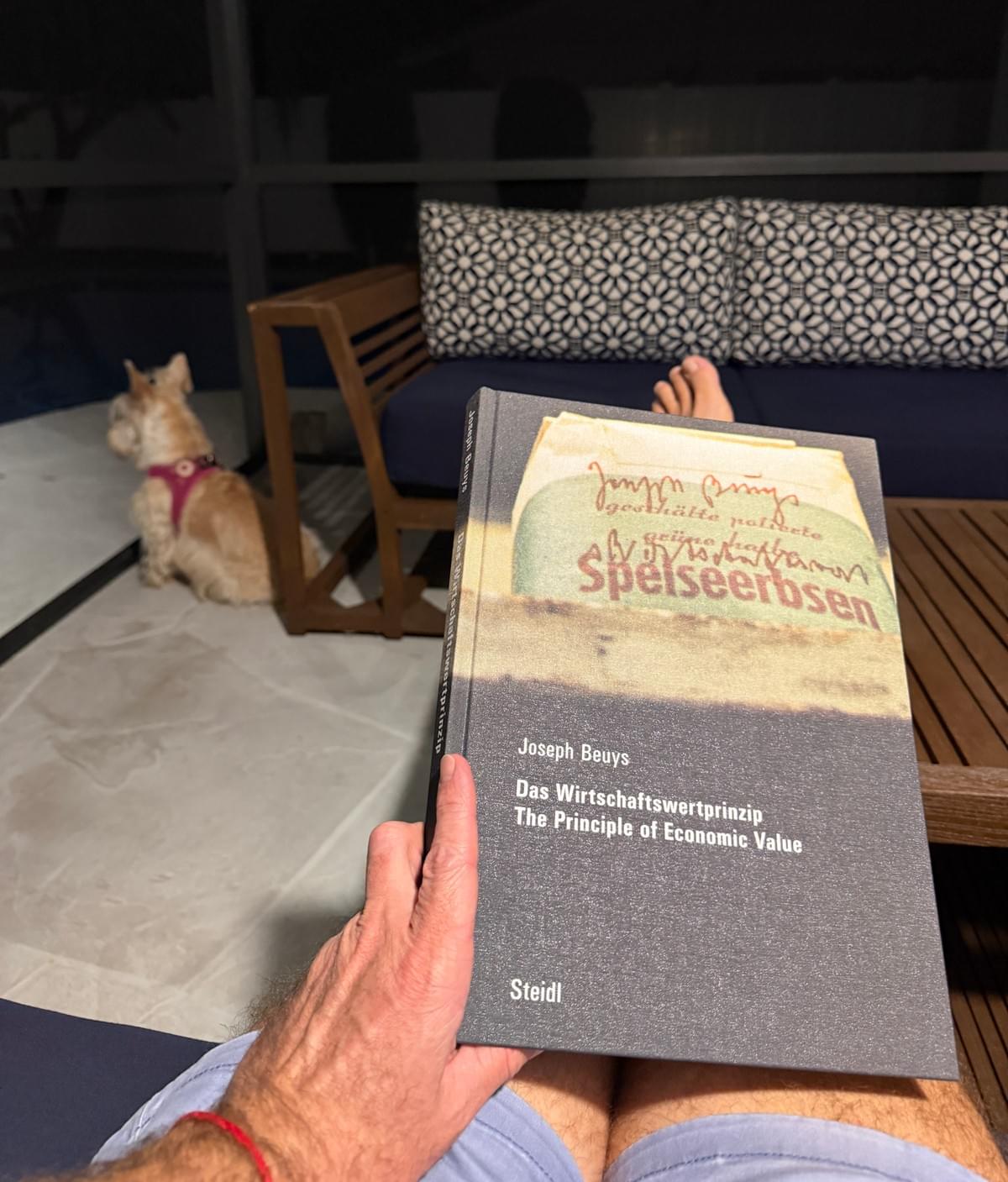
Friday evening, November 6, 2026. I’m sitting by the pool at my home in Palm Beach, reading Das Wirtschaftswertprinzip, Steidl’s book documenting Beuys’s investigation into economic value.
On its cover, coincidentally, is another package of East German lentils.
The midterm elections took place three days ago, and the results are still on my mind.
I’ve often said that I read the world through art. An economist reads it through numbers, an astronomer through the stars. Art doesn’t answer everything, but artworks concentrate questions that extend far beyond themselves. A sculpture can reveal something about the human condition. A painting can illuminate a civilization. And sometimes, apparently, a little tin of lentils can tell us something about the American economy.
⸻
A few weeks before the midterms, Donald Trump joked at a campaign rally that $5,000 would barely buy a hamburger and a small dessert at Mar-a-Lago, a short drive from where I’m sitting.
The crowd laughed.
Two prices for food, then. One mark for half a kilogram of lentils. Five thousand dollars, more or less, for a hamburger beneath a gilded ceiling.
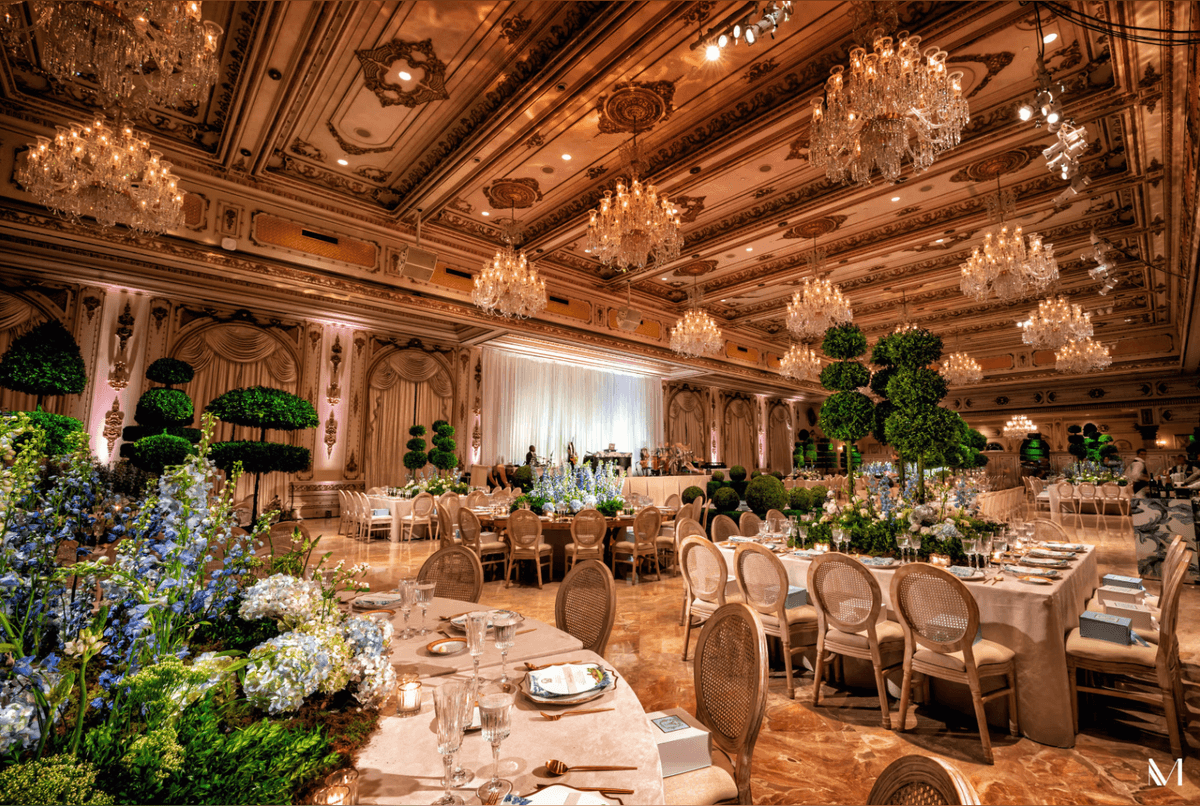
Neither number tells us much about the food. Both tell us a great deal about how value is assigned.
Trump made the remark while promoting a $5,000 dividend for American adults, conditional on Republicans keeping control of Congress. Meanwhile, Americans were facing rising living costs, tariffs, war, and gasoline above four dollars a gallon.
On November 3, Democrats won both chambers. The condition was not met.
Whatever my own opinions, I find something remarkable in that. American democracy is imperfect, frustrating, often divisive, yet it lets the electorate reconsider. In 2024, Americans voted one way. Two years later, they voted another.
An election is also an expression of value. Not economic value, but a collective judgment about what matters.
Consider another expression of contemporary value.
Trump Media, the company behind Truth Social, reported revenues of about $3.7 million in 2025. Yet Trump’s stake in it was once worth more than $6 billion on paper. By November 6, Reuters estimated it at about $460 million.
Still an extraordinary fortune.
In October, Reuters also reported that financial firms were paying up to $100,000 a month for faster access to the president’s posts. The advantage: about fifty milliseconds.
A fraction of a second becomes a commodity.
A company’s value need not match its revenue; markets price expectations and future possibilities. The immaterial is not necessarily illusory. But there is a difference between creating value and multiplying claims upon it.
What, precisely, is being valued?
⸻
In 1980, Joseph Beuys assembled Wirtschaftswerte (Economic Values) in the Museum of Fine Arts in Ghent: ordinary foodstuffs, mostly East German, on industrial metal shelving, surrounded by Flemish paintings in elaborate gilded frames.
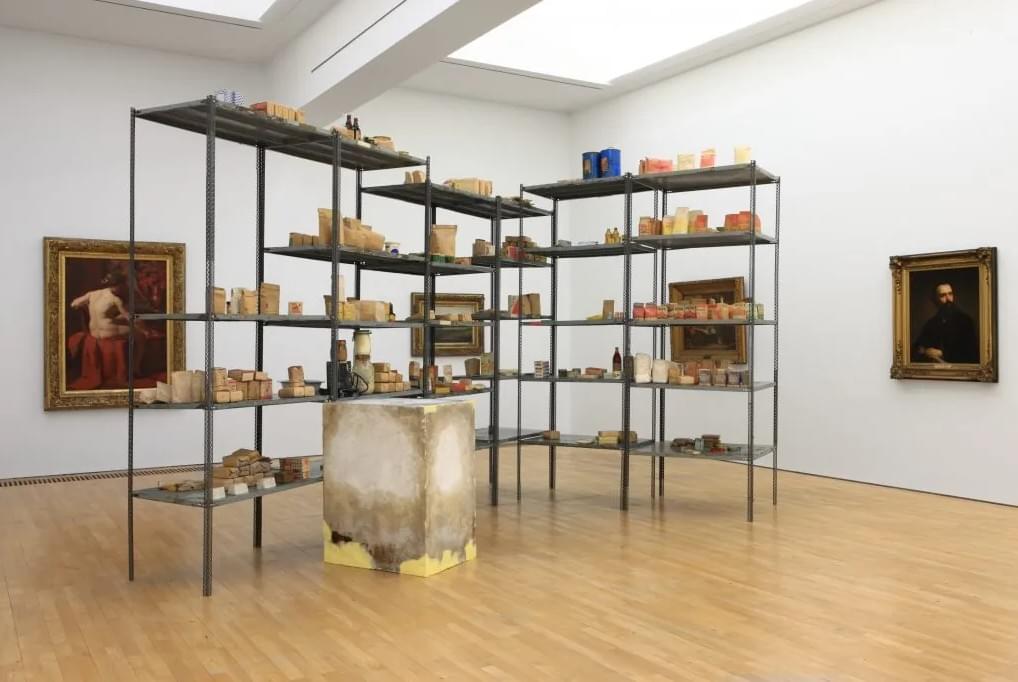
Food and painting. Necessity and luxury. East and West. Consumption and culture.
Beuys was not simply advocating socialism against capitalism. He questioned the assumptions underlying both. The fundamental source of capital, he argued, was not money but human creative capacity: the ability to imagine, invent, organize, and transform the conditions of existence. Money was only an instrument of exchange.
In 1980, the same year as Ghent, he condensed the idea into a formula, issued as a multiple on blackboard slate:
Kunst = Kapital.
Art equals capital.
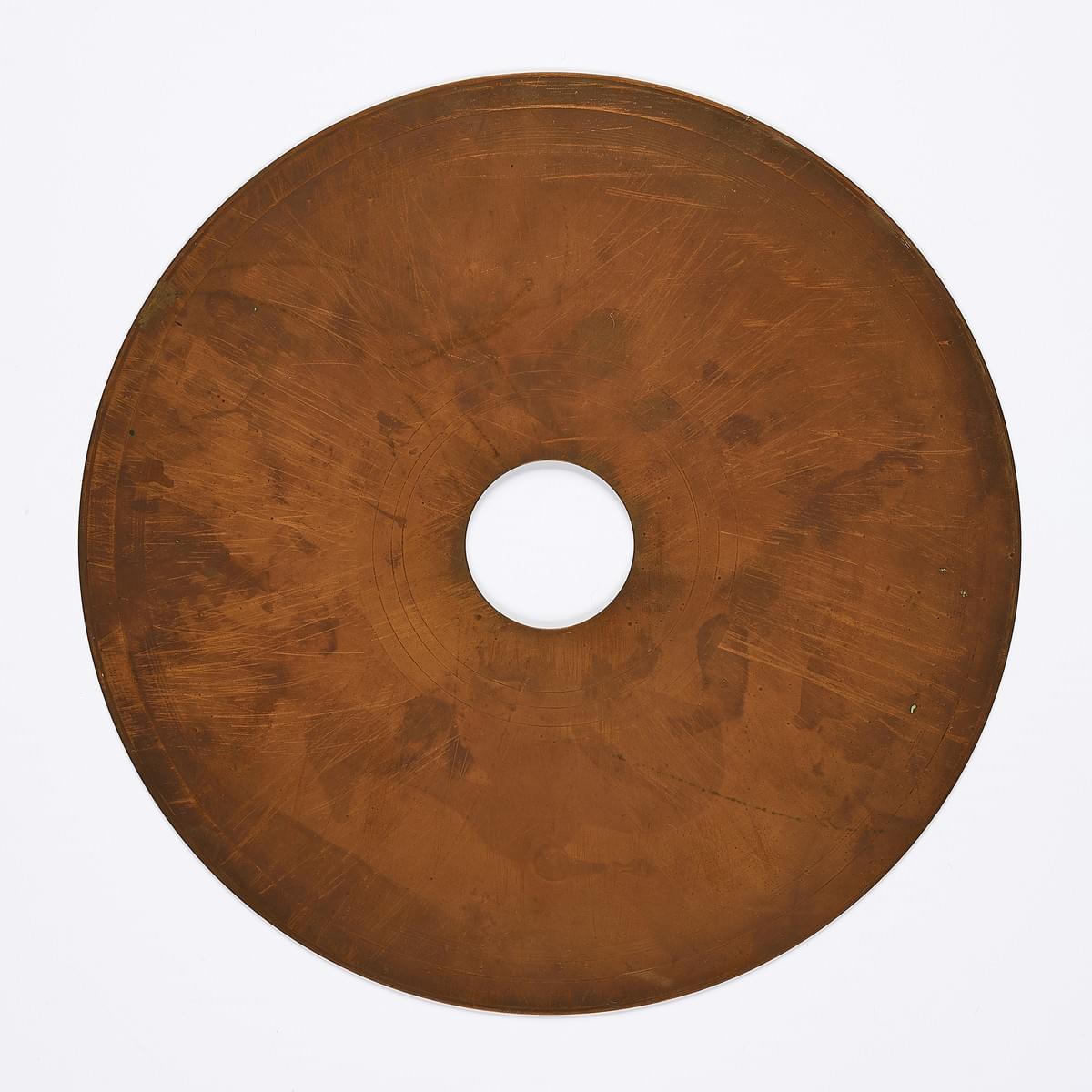
His materials were never incidental. Felt insulates. Fat stores energy. Copper conducts heat and electricity. Their properties exist independently of any price assigned to them.
Now consider the increasingly gilded Oval Office.
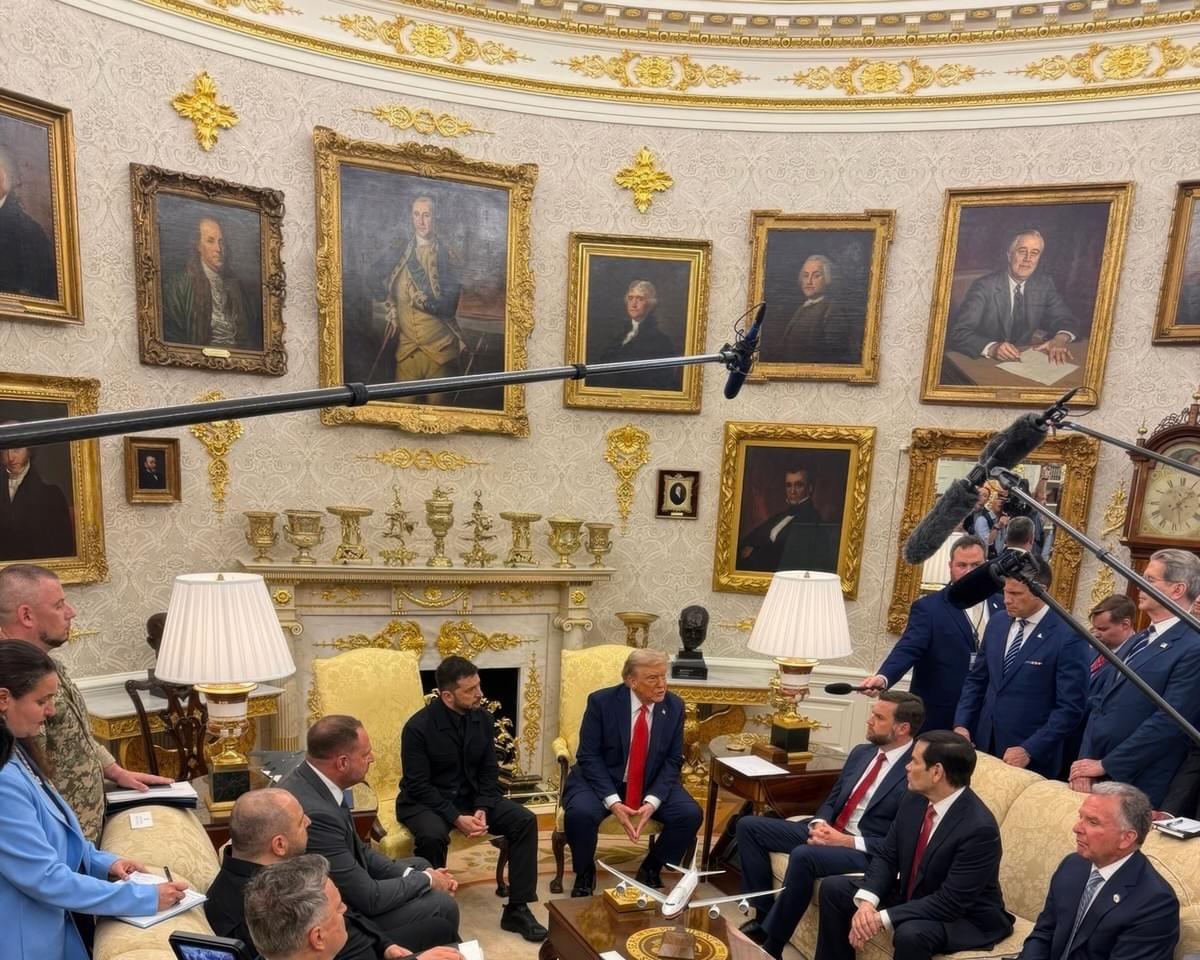
Gold is rare, durable, resistant to corrosion, a store of wealth for millennia. But gold is also a language.
This is not a matter of one president’s taste. Gilding has spoken for power from Versailles to the Kremlin. In the Oval Office, as at Mar-a-Lago, it speaks of authority, prosperity, and status.
Whether the gold is genuine or imitation is almost beside the point. Its function is representational.
Beuys’s copper, by contrast, matters not because it resembles something precious, but because of what it does.
One use of material announces value.
Another investigates it.
⸻
Of course, there is a paradox.
Beuys took an ordinary package of lentils, signed it, and turned it into an artwork. His signature, like a brand, created scarcity and economic value. The lentils left the economy of food and entered the economy of art.
Here the little tin and Trump Media meet. In both cases, a name generates value far beyond the material or revenue it is attached to. The mechanisms differ, but in both, the name becomes part of what is priced.
The difference lies in what the name points back to. Beuys’s signature points to decades of inquiry into materials, economics, and the creative capacity he believed was the true source of capital.
And I am hardly outside this system. I am an art dealer. My work involves recognizing, researching, interpreting, acquiring, and circulating objects whose significance may not be immediately apparent.
The little tin will soon be included in MATERIAL IMMATERIAL, an exhibition bringing Beuys into conversation with Auguste Rodin and ancient bronzes, some nearly three thousand years old.
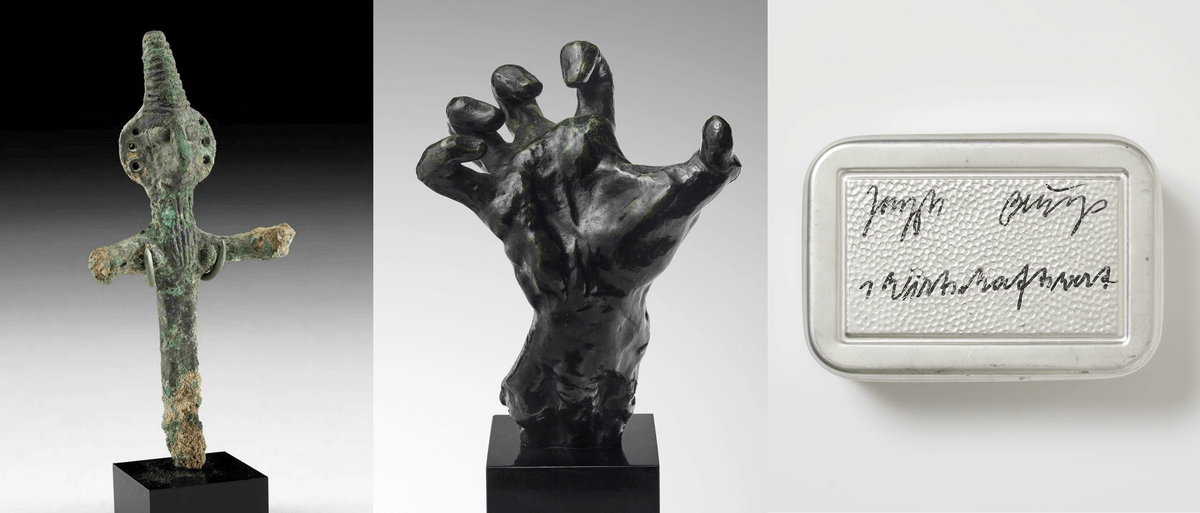
An ancient bronze, made for ritual or commemoration, has outlived the civilization that produced it. Rodin turned clay and plaster into gestures whose meanings are still unfolding. Beuys takes a package of lentils and questions value itself. Three ways matter becomes meaning.
Brought together, the objects remain what they are. Their context changes. Does that create value? I believe it can, not by altering the object, but by revealing relationships that were previously invisible.
Interpretation can also become marketing. A more persuasive story does not make an object more important. As a dealer, I cannot pretend that inquiry and commerce occupy separate universes.
That is precisely why Beuys interests me. His work does not allow us the comfort of standing outside the systems of value we question.
⸻
And then there are the insects.
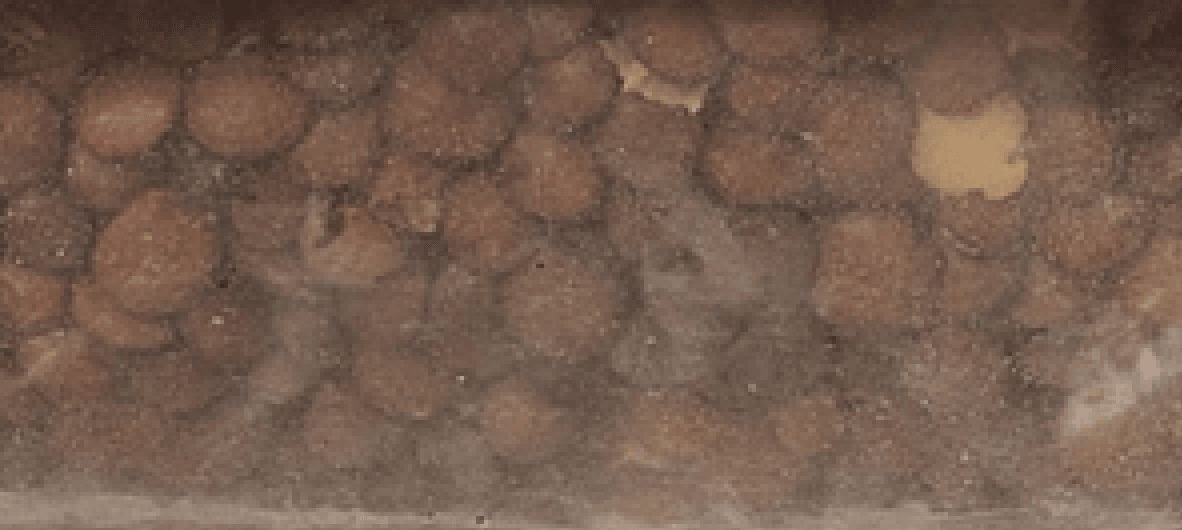
Lentils are meant to be eaten. By making them an artwork, Beuys removed them from their ordinary purpose. Their survival became something to protect rather than consume.
And yet, sometime during the intervening decades, insects appear to have consumed part of the contents. They were indifferent to the signature, the original price, and the art market’s later valuations.
For them, the lentils remained what they had always been.
Nourishment.
The government assigned a price. The artist assigned a meaning. The collector assigned importance. The art market assigned another price.
The insects simply ate.
Gold resists decay. Lentils obey another logic: they grow, nourish, and perish. Yet in Beuys’s hands, these perishable grains have acquired a cultural life that may outlast their usefulness as food. The Getty Conservation Institute has documented how the organic contents of Wirtschaftswerte deteriorated and were replaced in many packages. How much of the original material must survive for an artwork to remain itself?
I first considered removing the insect remains from my tin. Now I’m inclined to keep them, provided the infestation is no longer active. They belong to the object’s history.
Has Beuys freed the lentils from their economic function, or simply moved them into another economy, one where their preservation becomes essential? Perhaps both.
And perhaps the insects, oblivious to the whole enterprise, are the only participants who actually fulfilled the lentils’ original purpose.
⸻
We live in what I have called the Age of the Immaterial, when enormous value passes through information, algorithms, and financial instruments. The immaterial is not an illusion; Beuys’s whole idea of art rests on creativity as a value irreducible to matter. But the further value travels from its material origins, the more important it becomes to understand what sustains it.
A government sets a price. A market assigns a valuation. A celebrity monetizes a name. An artist transforms a commodity. A dealer creates relationships through interpretation. An electorate withdraws its confidence.
And an insect turns a lentil into the energy to live.
Perhaps that is why Beuys still matters, even out of fashion. He asks for more than recognition of a famous name or the spectacle of wealth. He asks us to think.
A $5,000 hamburger beneath a gilded ceiling announces a price. Beuys’s little tin asks what something is worth.
And that brings me back to Friday evening in Palm Beach. A book in my hands. A little box of East German lentils. An election that has just reminded us that political authority is neither permanent nor unconditional.
A package of lentils, signed by Joseph Beuys nearly half a century ago, quietly asks a question that neither politics nor economics can fully answer on its own.
What are we actually valuing?
Just saying...
⸻
On Authorship
This essay emerged from my acquisition of Joseph Beuys’s 1 Wirtschaftswert (Linsen), my reading of Das Wirtschaftswertprinzip, and a continuing dialogue with AI, first ChatGPT and then Claude. The research, associations, and language evolved collaboratively. The questions, curatorial judgments, and responsibility for the resulting text are mine.
I have written more extensively about this approach in On Authorship, Responsibility, and the Use of AI, where I explore authorship as an act of attunement, selection, and responsibility.
Sources include reporting on Trump’s October 2026 rally remarks, the November midterm elections, Reuters’ financial reporting on Trump Media and Truth API, Steidl’s Das Wirtschaftswertprinzip, and the Getty conservation study. The 1980 Ghent installation and my individual Linsen belong to the same investigation, but are distinct physical works.